



A Home That Lasts 100 Years.
Living in Okinawa, even a century from now.
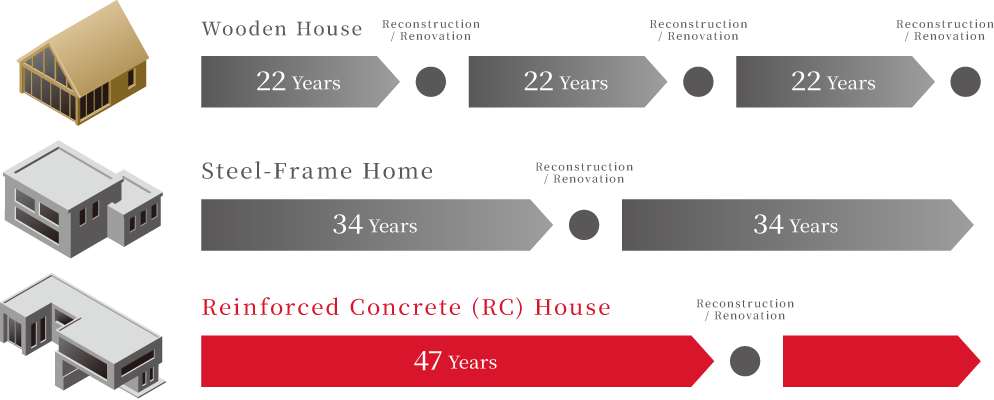
The statutory durable life of an RC structure is 47 years—
more than twice that of a wooden house under Japanese standards.
In reality, RC homes are known to last over a century.
Across Europe, concrete residences have stood for over 100 years,
maintaining their original form and strength.
 ※Based on Tokyo Shoko Research, March 2025
 for the number of reinforced concrete (RC) single-family homes built
in both 2023 and 2024. ※Based on the Research Report by Tokyo Shoko Research, Okinawa Branch
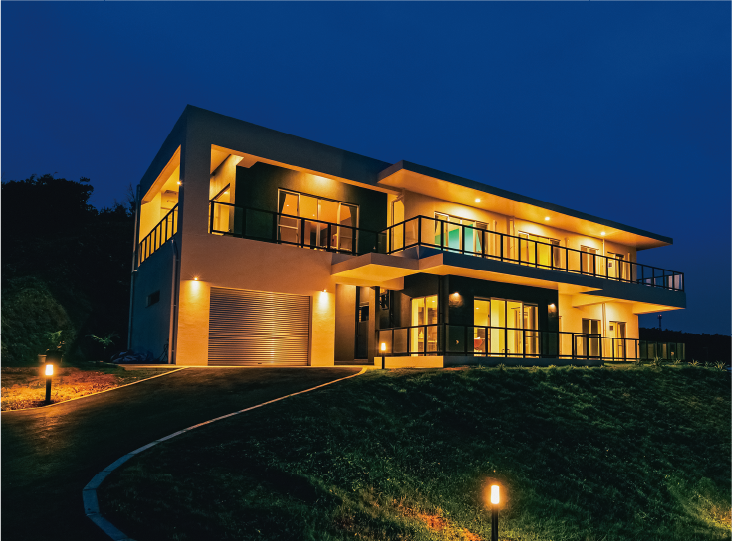
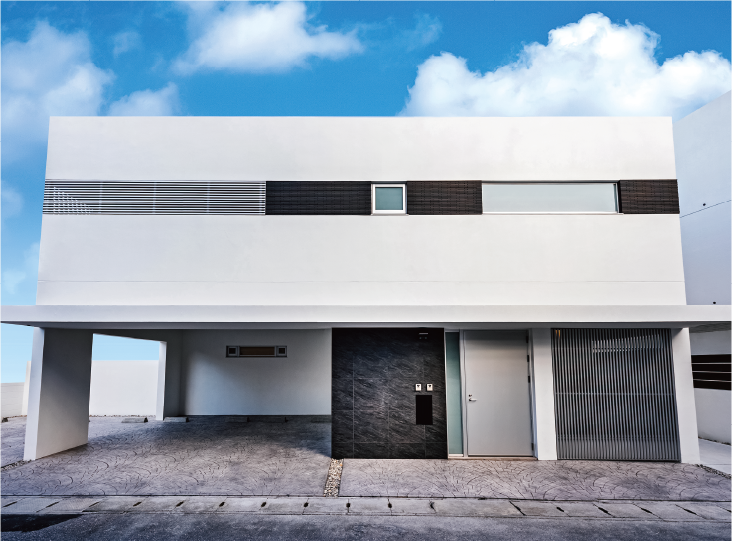
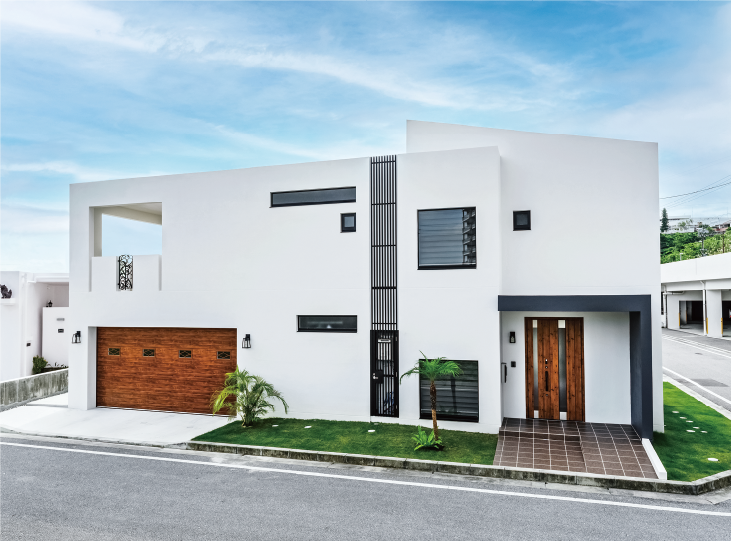
Building Safe and Secure Homes
Through RC (Reinforced Concrete) Construction
Designed for Okinawa’s Unique Climate and Environment
“RC construction,” short for Reinforced Concrete,
refers to a structural system that combines steel reinforcement with concrete—
a material celebrated for its exceptional strength.
At IMHOME, we adopt a wall-structured design,
where floors, ceilings, and walls form a solid, unified surface that supports the entire building.
This approach offers numerous benefits in daily living,
providing stability, comfort, and long-term peace of mind.
RC Homes Dominate in Okinawa!
While reinforced concrete (RC) houses account for less than 1% of all homes nationwide(Japan),
an astonishing 87.9% of homes in Okinawa are RC construction.
In other words, out of every ten houses built on the island,
nearly nine are made of reinforced concrete.
Ratio of Housing Structures in Okinawa Prefecture
Source: Ministry of Land, Infrastructure, Transport and Tourism (MLIT),“Building Construction Statistics Survey,”
Okinawa Prefectural Government, Statistics Division, Land Statistics Survey
Reinforced Concrete (RC) Construction
87.9%
Wooden Construction
8.1%
Steel Frame Construction
2.3%
Wall-Type Reinforced Concrete Structure
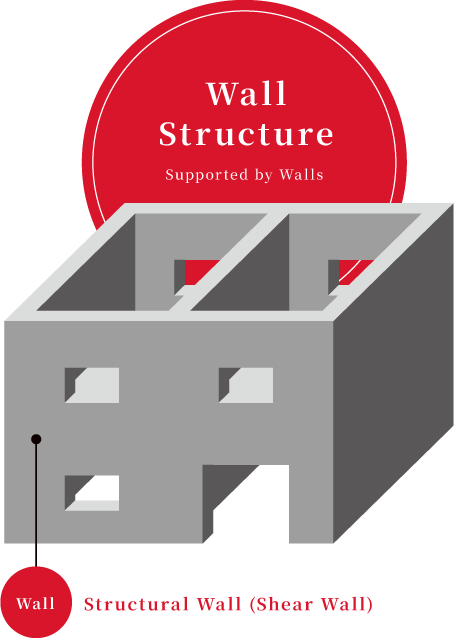
At IMHOME, we use the Wall Reinforced Concrete (WRC) construction method.
This is one of the two main types of reinforced concrete (RC) structures and differs in that it has no columns or beams.
Instead, the building is supported primarily by thick concrete walls known as shear walls.
In RC construction, there are two main structural types:
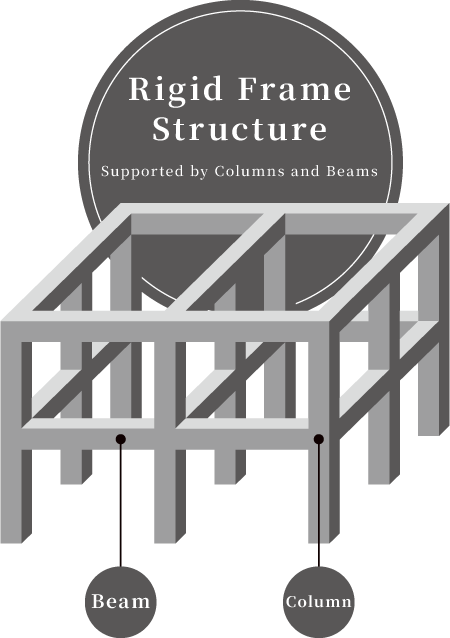
the “Rigid Frame Structure” (Ramen Structure) and the “Wall Structure” (WRC).
A rigid frame structure is a skeletal framework in which columns and beams are integrated into one unit—
a method widely used in apartment buildings throughout Japan.
The wall structure, on the other hand, is composed only of walls and floors, without columns.
Because it relies on walls for support rather than beams or posts,
it allows for greater flexibility and openness in interior and exterior design.
The absence of columns and beams creates a more spacious and uncluttered interior.
In addition, since the walls themselves are made of reinforced concrete,
the structure provides excellent earthquake resistance and superior safety compared to other construction methods.
Difference Between Rigid Frame and Wall Structures
Features of Reinforced Concrete (RC) Homes
POINT01Earthquake Resistance
What Does “Earthquake Resistance” Mean in Housing?
In Japan, residential buildings must comply with seismic standards.
These standards are based on the principal that a structure should “not collapse immediately,
even during a strong earthquake of seismic intensity 6-upper to 7.”
In other words, while these standards aim to protect lives,
the building itself may still suffer severe damage and require reconstruction.
RC Structures Offer Superior Earthquake Resistance
Reinforced concrete (RC) homes are designed to withstand seismic shaking,
protecting families from collapse during earthquakes.
By minimizing the risk of structural failure,
RC homes provide safer evacuation routes and greater security for your loved ones.
Minimizing Structural Deformation
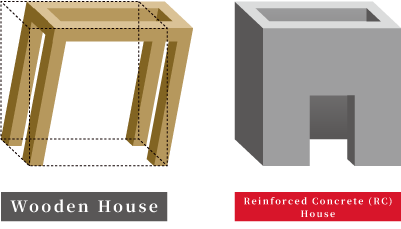
RC construction minimizes deformation caused by multi-directional shaking during earthquakes—
especially horizontal movement—helping to reduce structural damage when a quake occurs.
Protecting Interior Finishes as Well
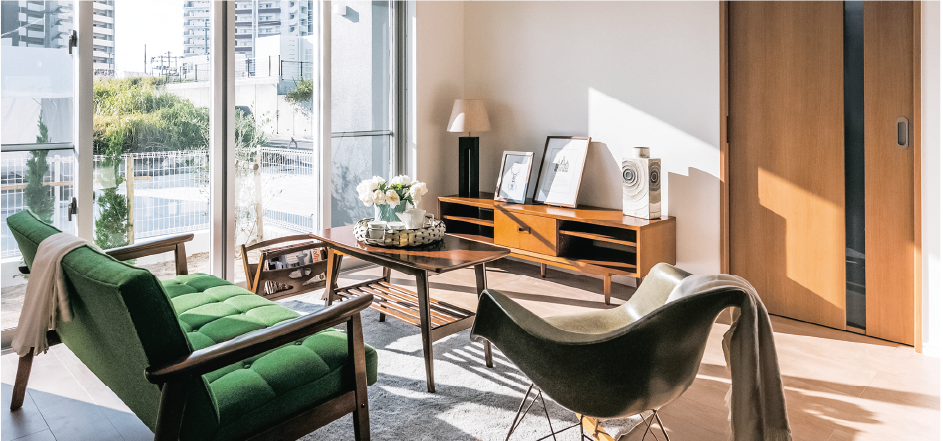
By limiting the building’s deformation during an earthquake,
RC homes also help prevent damage to interior materials such as vinyl wall coverings, doors, and fittings.
This makes it easier and faster to restore the home even in the event of a major earthquake.
Strong Against Both Compression and Tension

RC structures combine the strengths of two materials—
concrete, which excels under compression, and reinforcing steel, which is strong under tension.
By harnessing the advantages of both, RC construction can effectively withstand seismic shaking.
Stronger Than Wooden or Steel-Frame Structures
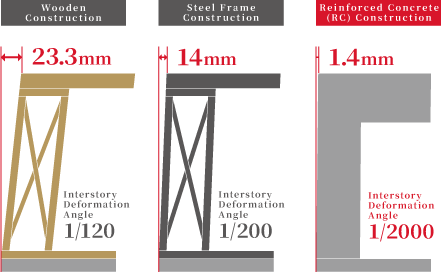
Compared to RC buildings, wooden and steel-frame structures experience greater deformation during earthquakes.
Wooden houses are flexible and more prone to bending,
while steel-frame structures are stiffer than wood but still fall short of the strength and rigidity of reinforced concrete.
Lower Risk of Collapse
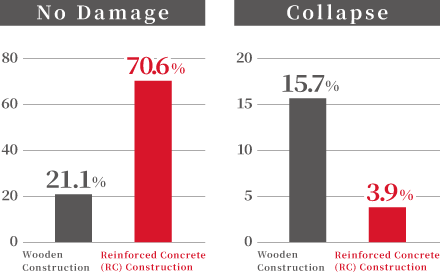
As the degree of deformation during an earthquake varies by structure,
it directly affects how likely a building is to collapse.
Because reinforced concrete (RC) structures are stronger and deform less under seismic shaking,
they have a significantly lower collapse rate compared to wooden houses.
Resistant to Typhoons as Well

Lateral shaking can also occur during strong winds, such as those caused by typhoons.
RC homes not only resist this horizontal movement but also remain stable thanks to the inherent weight of their reinforced concrete structure.
Roofs That Won’t Be Blown Away
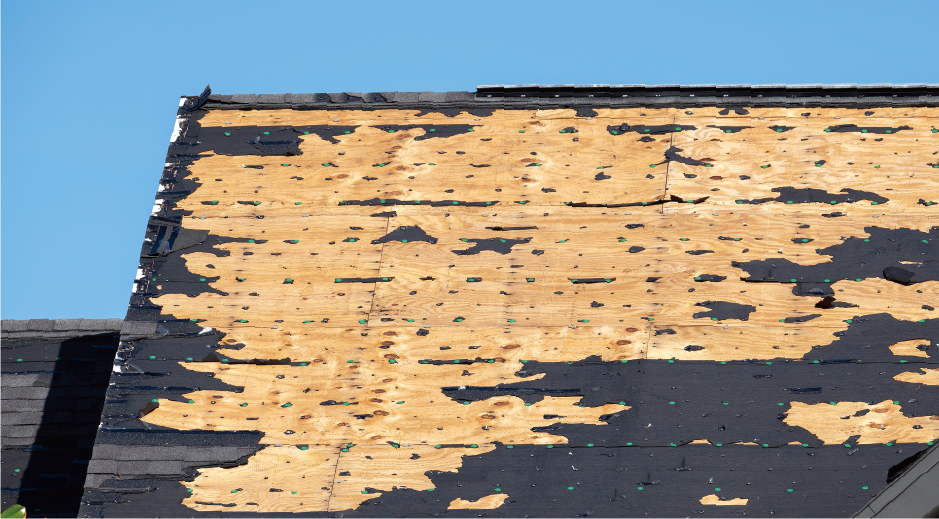
RC homes do not use tiles or slate roofing, eliminate the risk of the roof being torn off by strong winds.
This helps prevent damage to neighboring properties and reduces the chance of leaks caused by roof displacement.

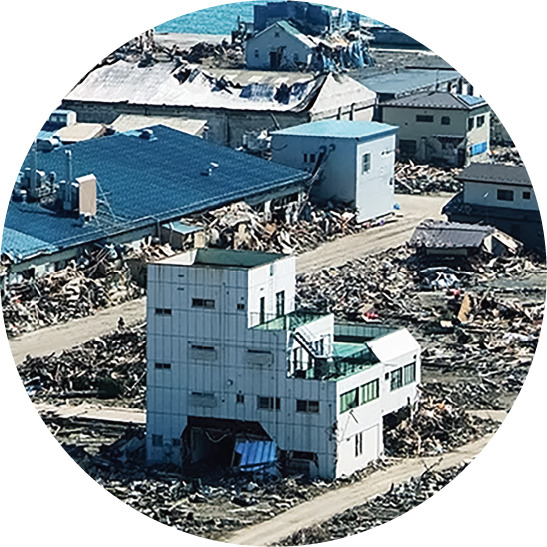
RC Structures Are Also Strong Against Tsunamis
During the Great East Japan Earthquake,
tsunami waves exceeding 40 meters struck the Tohoku region.
Many homes were swept away, leaving behind only debris,
RC homes were among the few that remained standing.
Thanks to their strength and weight—particularly when built using the on-site wall construction method—
RC homes have a continuous connection between the foundation and walls, leaving no gaps.
This prevents water and mud from entering the foundation,
allowing the structure to withstand the immense force of a tsunami.
POINT02Fire Resistance
What Does “Fire Resistance” Mean in Housing?
Fire resistance refers to a building’s ability to prevent collapse and the spread of fire
throughout the duration of a blaze.
In other words, a highly fire-resistant home is less likely to collapse during a fire
and helps prevent flames from spreading to neighboring houses.
Most importantly, if a structure can remain standing long enough during a fire,
it provides critical time for family members to safely evacuate.
RC Homes Offer Superior Fire Resistance
Even in the unlikely event of a house fire,
RC homes help prevent flames from spreading within the residence
and protect against fire transmission from neighboring houses—
creating a truly safe home that protects your family.
Exceptionally Fire-Resistant
Fire damage threatens not only property but also the lives of loved ones.
RC structures can withstand temperatures of up to 1,000°C for more than two hours.
Because most residential fires burn for less than that duration,
RC homes are considered highly fire-resistant.
Their ability to endure high heat for extended periods
ensures time for safe evacuation and the preservation of life above all else.
Reduced Emission of Toxic Gases During Fires
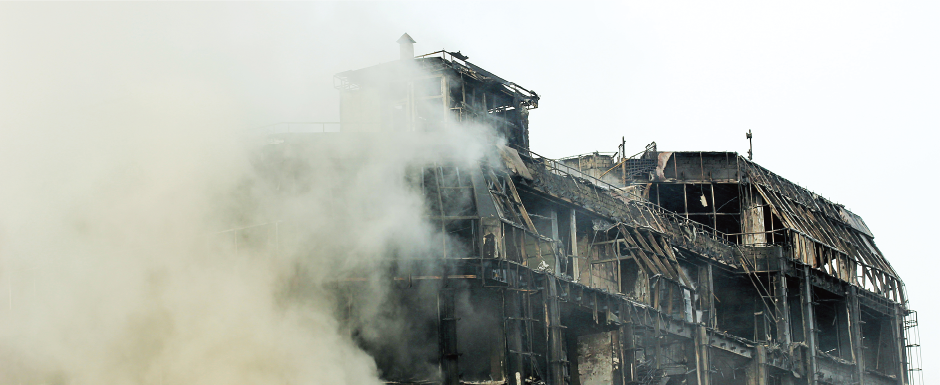
During a fire, both household items and building materials can release toxic or irritating gases,
most of which are inhaled and can cause serious harm to the body.
RC structures, however, significantly reduce the generation of such harmful gases,
minimizing health risks during evacuation and improving overall safety.
Prevents the Spread of Fire
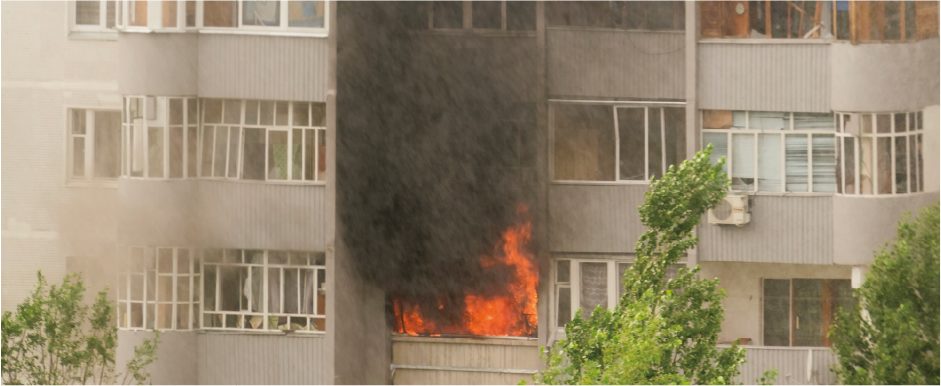
What makes fires truly dangerous is how quickly they can spread.
In a house fire, flames can move from the room of origin to other parts of the home,
potentially trapping family members before they even realize it.
Fires from neighboring houses also pose a serious threat.
However, due to the fire-resistant nature of reinforced concrete (RC),
RC homes act as natural firebreaks, preventing flames from spreading.
They stop external fires—such as those from nearby roofs or eaves—from penetrating the structure,
providing an added layer of safety for your family and home.
Lower Fire Insurance Premiums
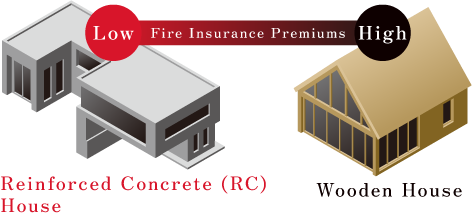
Fire insurance premiums vary depending on a building’s structure.
Homes made of fire-resistant materials have lower premiums,
while those made of combustible materials are more expensive to insure.
In residential insurance, buildings are classified into three structural categories:
M-Structure (Mansion Structure), T-Structure (Fire-Resistant Structure),
and H-Structure (Non-Fire-Resistant Structure).
Among these, M-Structure—which includes reinforced concrete (RC) buildings—
has the lowest insurance premiums, while H-Structure is the highest.
Stronger Fire Resistance Than Wood or Steel Structures
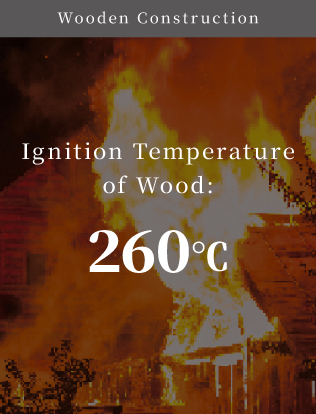
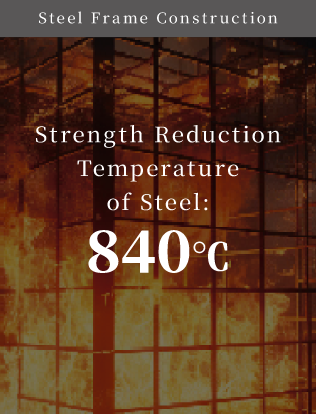
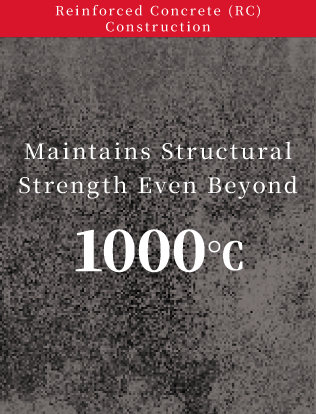
As shown above, RC construction is exceptionally resistant to fire.
While steel-frame structures may appear strong, steel begins to deform at around 550°C,
and wooden structures—being inherently flammable—ignite and carbonize at about 260°C.
For protecting both your home and your family in the event of a fire,
reinforced concrete (RC) construction is clearly the safest choice.
Important Buildings Are Made with Reinforced Concrete (RC)
It’s something we rarely think about,
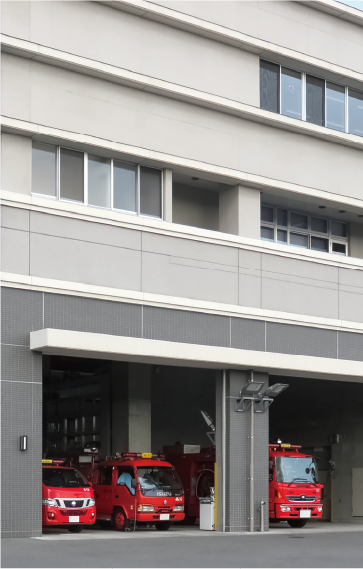
but many critical facilities—such as fire stations and police stations—
are actually built with reinforced concrete (RC).
If these buildings were to collapse or burn down during a disaster,
they would no longer be able to protect the community or support rescue operations.
Similarly, facilities with a high risk of fire, such as gas stations,
are often constructed using RC for its superior safety.
The fact that RC is chosen for such essential structures
proves that it is also one of the most reliable choices for residential homes.
POINT03Airtightness
When considering soundproofing, it’s important to address both directions—
the sounds coming in from outside and the sounds going out from inside.
A well-sealed home allows you to enjoy your hobbies and daily life
without worrying about noise, enriching your overall living experience.
Seamless Integration of Floors and Walls
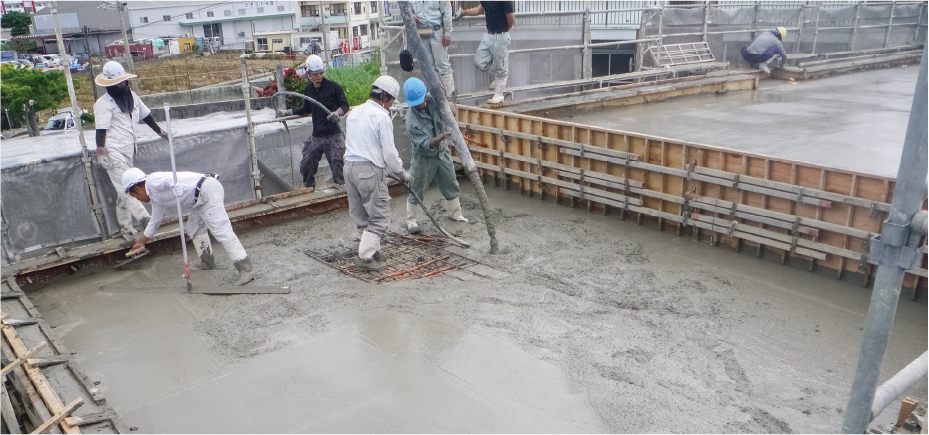
Among RC construction methods, the on-site wall construction system
creates a perfectly unified connection between floors and walls, leaving no gaps.
This results in a structure with exceptional airtightness.
Superior Sound Insulation Performance
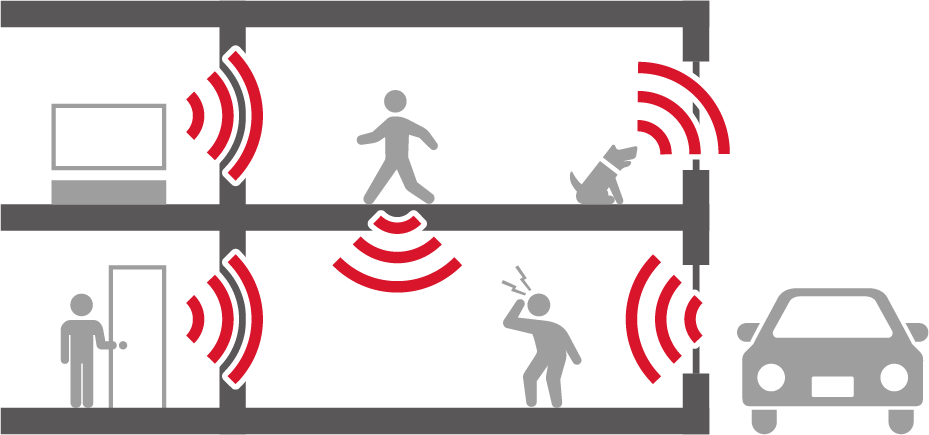
Sound insulation largely depends on the thickness and density of walls and floors.
Thicker and denser materials effectively absorb sound,
blocking out external noise and ensuring a quieter indoor environment.
Higher Airtightness Than Wooden or Steel-Frame Homes
Concrete walls have high density and minimal gaps,
making it easier to prevent outside air from entering
and indoor air from escaping.
Reinforced Concrete (RC) House
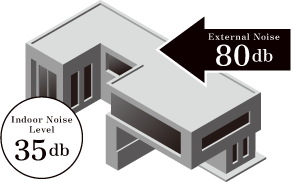
Because the structure is seamlessly integrated with no gaps,
RC homes offer superior airtightness,
and their dense composition also provides excellent sound insulation.
Steel-Frame Home
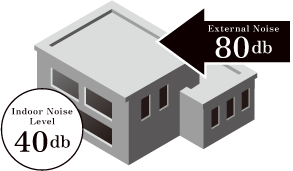
Steel expands when heated and contracts when cooled,
so temperature changes can cause slight movement and gaps,
reducing the home’s overall airtightness.
Wooden House
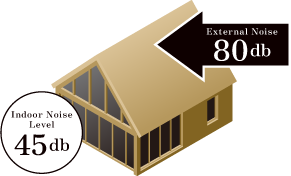
While wooden houses have good natural ventilation,
their lower airtightness makes them more prone to sound leakage.
POINT04Thermal Insulation
High thermal insulation helps protect your family from heat-related health risks
such as heatstroke during Okinawa’s hot summers.
By maintaining a comfortable indoor temperature,
it also improves air-conditioning efficiency and reduces utility costs—
enhancing both comfort and quality of life.
Less Affected by External Temperatures
Concrete has a natural ability to store heat,
making it less susceptible to changes in outdoor temperature.
As a result, RC homes retain cool air more effectively,
keeping indoor temperatures stable and comfortable even in the summer heat.
Higher Thermal Insulation Than Wooden Homes
Typical Wooden Home Insulation
In wooden houses, insulation is placed between the columns,
which can create seams and small gaps that reduce airtightness
and make condensation more likely to occur.
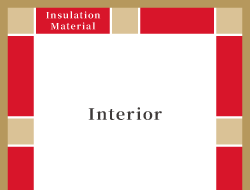
Concrete Home Insulation
In RC construction, insulation is applied along the interior surface of the concrete,
providing superior airtightness and thermal insulation performance.
IMHOME Residences Also Excel in Air Quality
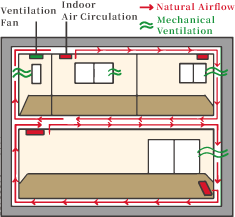
IMHOME residences are equipped with a standard air supply and exhaust system
designed to promote effective air circulation suited to Okinawa’s hot and humid climate.
Because RC homes built with the on-site wall construction method offer exceptional airtightness,
they enable even more efficient ventilation throughout the living space.
POINT05Flexibility
High Degree of Layout Freedom
Because RC construction involves pouring concrete into formwork,
a wide variety of floor plans can be created depending on the mold design.
This allows for large openings and expansive spaces,
making it possible to design homes that perfectly match your lifestyle.
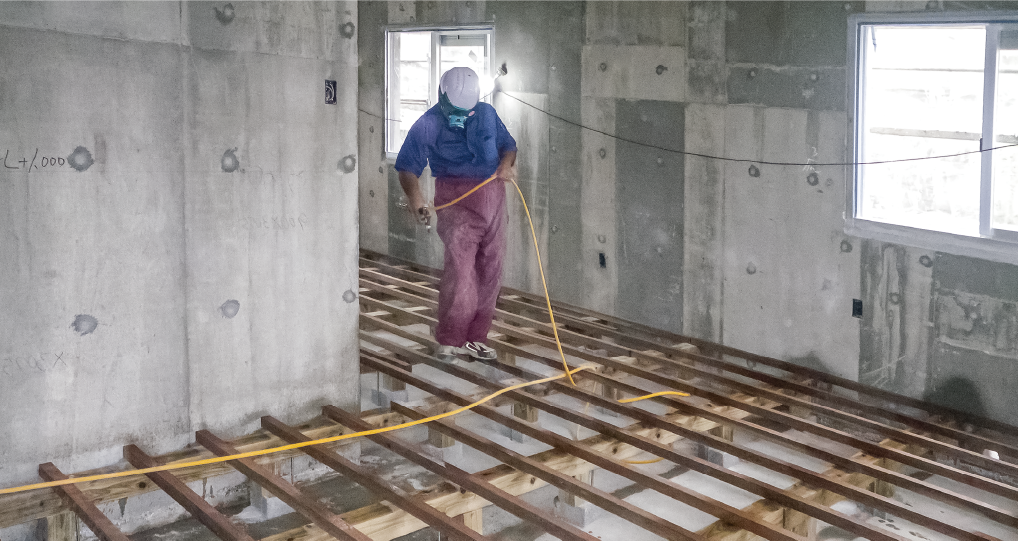
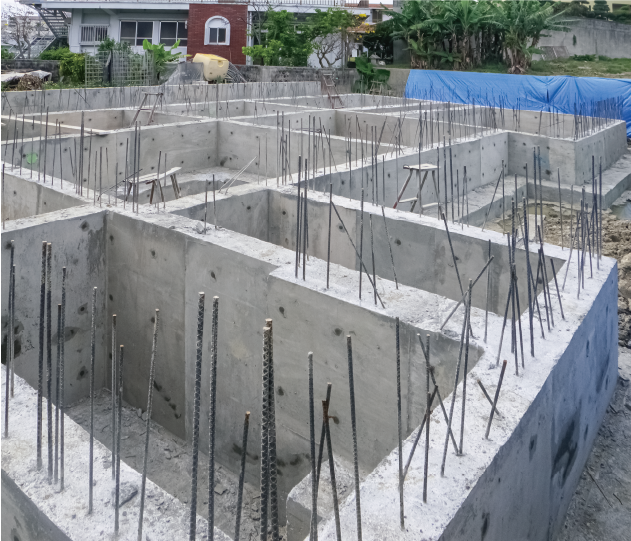
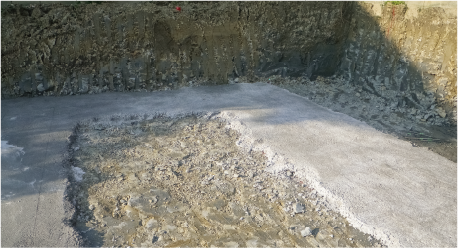
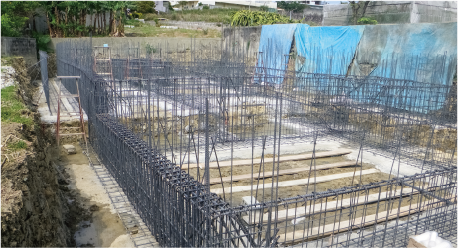
Construction Process
01.Plain Concrete Foundation (Base Concrete)
02.Reinforcement Work & Foundation Installation
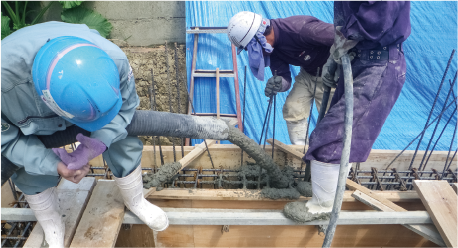
03.Foundation Concrete Pouring
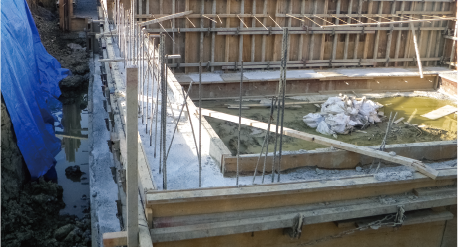
04.Completion of Concrete Pouring
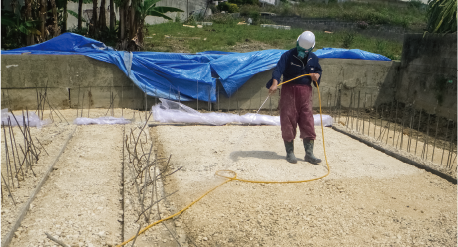
05.Soil Treatment
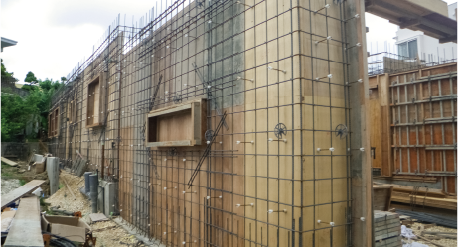
06.Wall Reinforcement Installation
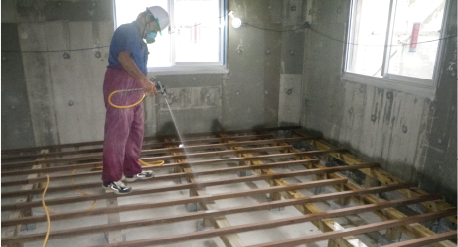
07.Interior Finishing Work
Adaptable to Lifestyle Changes
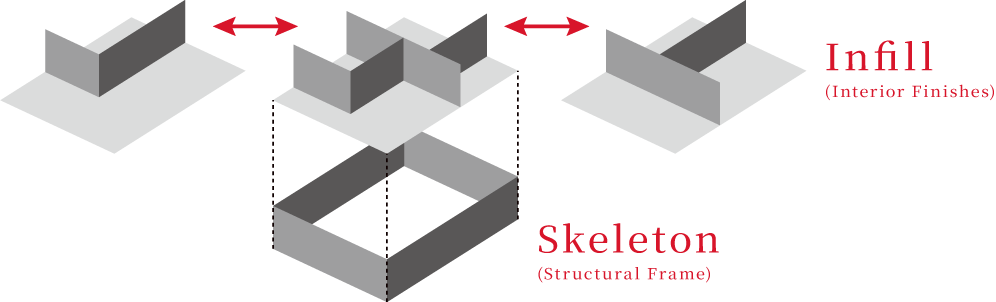
RC homes are built with a structure that separates the skeleton (the structural frame or shell)
from the infill (the interior finishes and equipment).
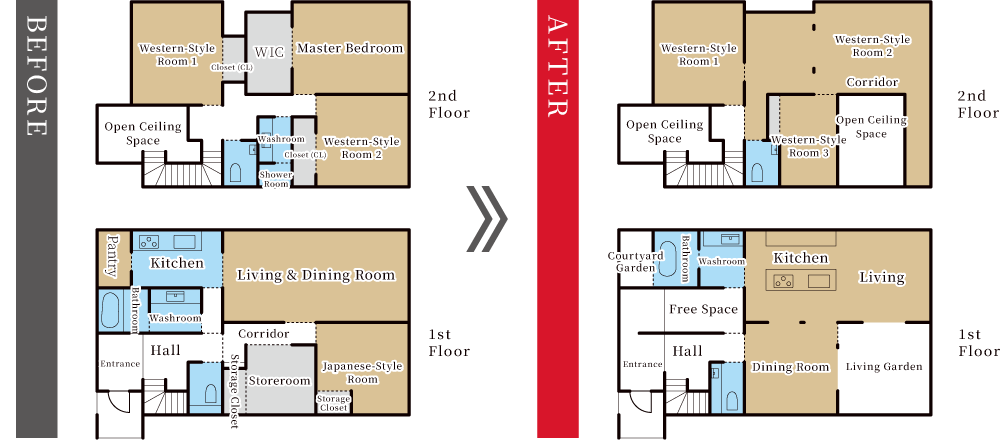
This design allows the infill portion to be freely modified
to accommodate changes in family size or lifestyle over time.
Example of Floor Plan Modification
POINT06Design Aesthetics
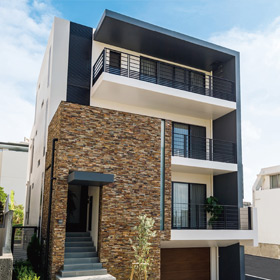
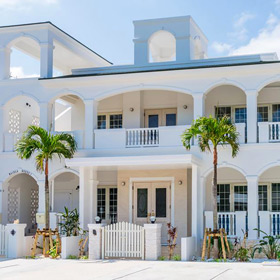
Experience the diverse designs only RC can offer
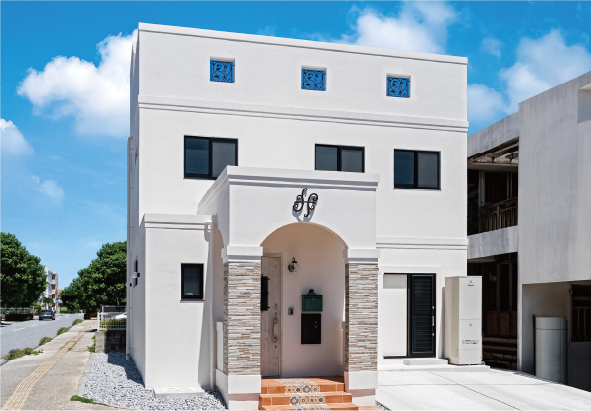
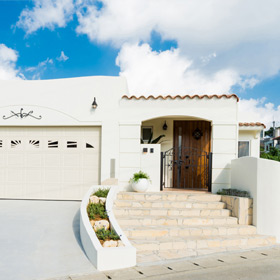
An arched entranceway,embodying RC’s design freedom, styled in a Mediterranean-inspired white motif.
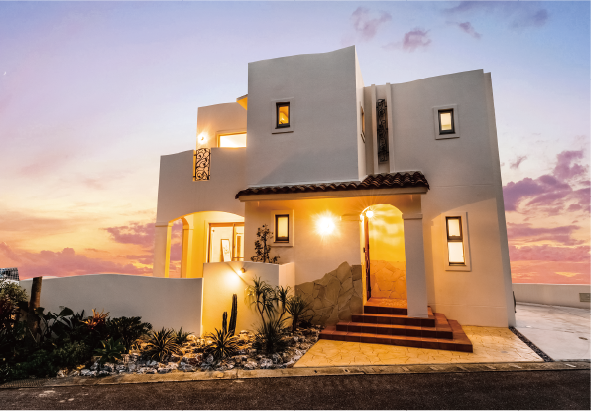
Inspired by Okinawa’s traditional red roof tiles,
this design emphasizes the harmony of light, space, and graceful curves—
a level of artistry achievable only through reinforced concrete construction.
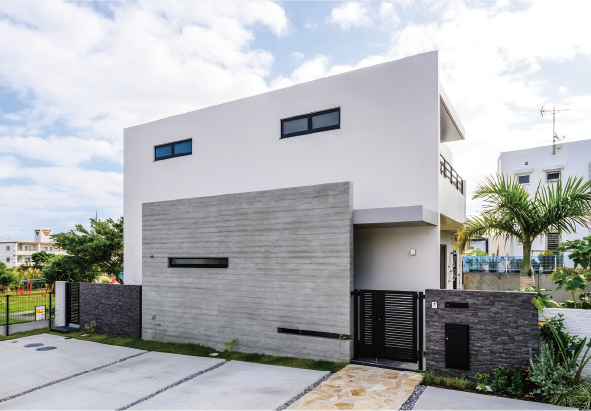
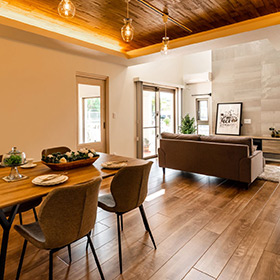
The living room spans approximately 20 tatami in size,
with an additional free space that creates a vast, open interior.
The simple and modern design remains timeless and appealing.
Comparison with Wooden and Steel-Frame Homes
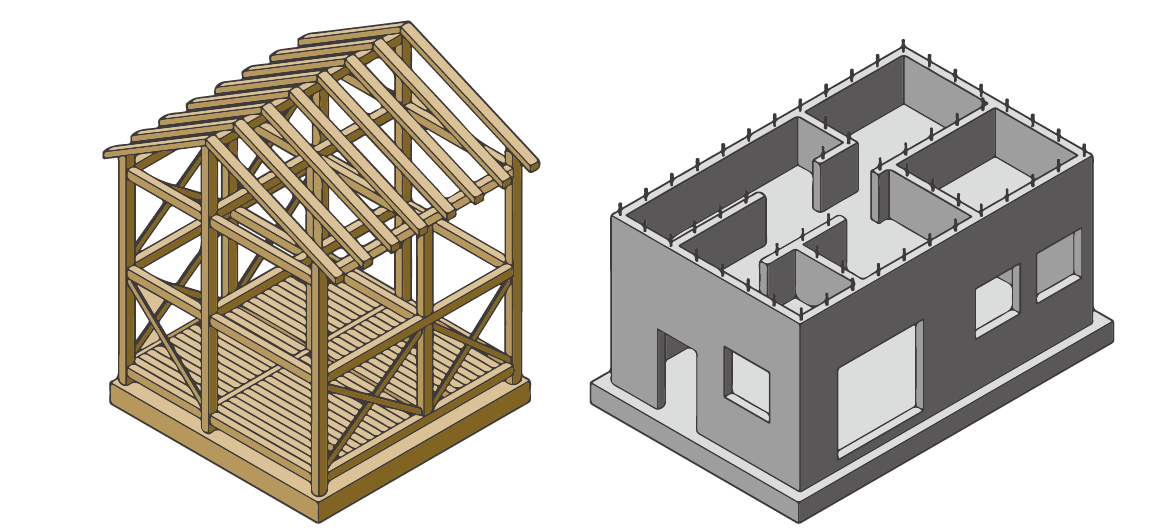
Wooden and steel-frame structures offer flexibility in layout and adaptability,
their column-and-beam framework often integrates partition walls with structural supports,
making it difficult to create large open spaces.
Renovations may be limited by immovable load-bearing columns.
Works
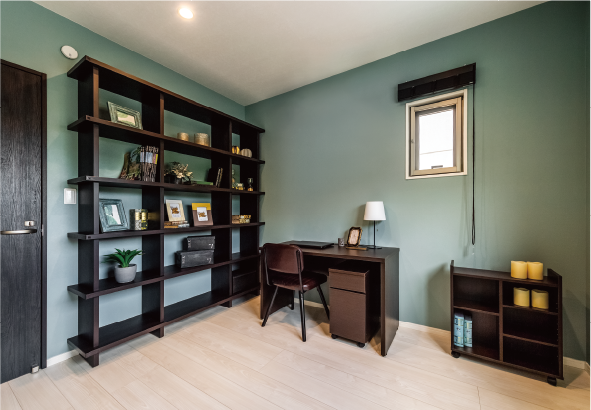
The study room, enhanced by RC’s sound insulation, offers a quiet space for focus and creativity.
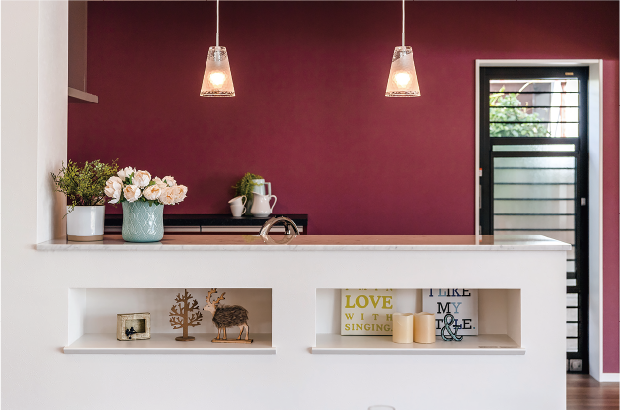
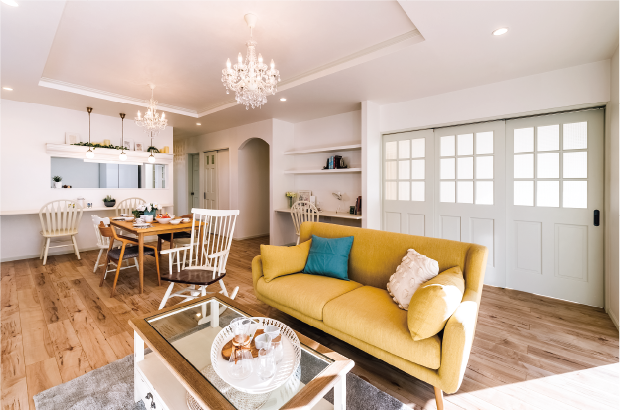
By emphasizing light and color, ith indirect lighting and coordinated palettes, our specialists create living spaces of comfort and refinement.
POINT07Asset Value
RC homes offer long-term durability, enriching life while supporting sustainability and environmental preservation.
RC Homes Are Long-Lasting and Hold High Asset Value
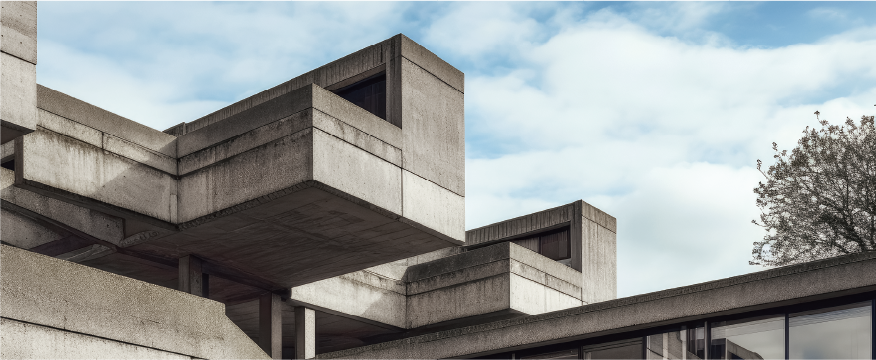
RC homes, with a statutory life of 47 years and actual longevity of up to 100, maintain asset value by preventing termite damage through seamless floor-wall integration.
Comparison with Wooden and Steel-Frame Homes
Wooden structures last about 22 years and steel-frame structures about 34 years, shorter than reinforced concrete (RC) homes.
Beyond asset value, maintenance requirements also differ—
wooden and steel-frame homes generally need more frequent upkeep,
which increases long-term maintenance costs.
Delivering High-Quality, Strong Homes
to the People of Okinawa—Now and Always
The Okinawa’s Life
Living and Belonging in Okinawa
What we strive to protect—now and in the years to come—
is the creation of homes where everyone can return with peace of mind.
Whether it’s the everyday “I’m home”
or the “I’m home” of family members returning after a long time away,
we wish to preserve those moments and the warmth they carry.
By continually addressing the natural disasters and challenges that may arise in the future, and providing homes suited for the generations ahead,we hope to help shape a brighter future for Okinawa.